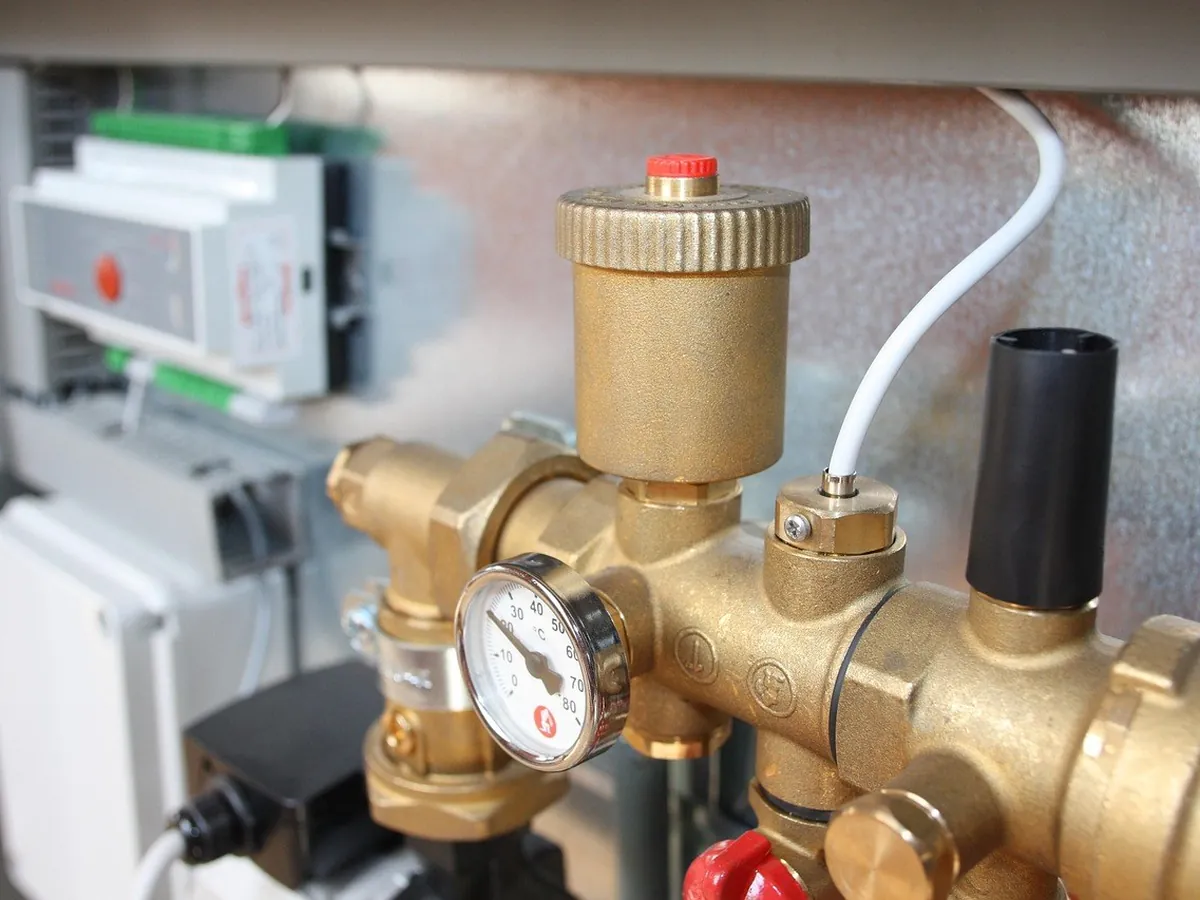
If you smell gas, leave the home right away and call from a safe place. For any other furnace problem, our crew comes out and measures, and you get a written price before any work starts. A national guide puts an average furnace repair at $100 to $600 (Bob Vila, 2023). Prices in Salt Lake City depend on your home and equipment, so ask for a written price after the technician sees the system.
Heater repair and heating system repair calls in Salt Lake City start the same way: the safety steps below, then the checks you can do yourself before you book.
Gas smell or a carbon monoxide alarm: what to do first
If you smell gas
Natural gas has no smell of its own. An added chemical, mercaptan, makes it smell like sulfur or rotten eggs. A hissing or whistling sound near pipes or appliances is another warning sign, according to Enbridge Gas Utah.
If you smell gas, leave the home right away. Leave doors and windows open behind you if you can do so without delay, and call from a safe place. Call emergency services and the gas company from outside; the gas utility's 24-hour emergency line is for once you are safely away. Do not use phones, switches or electronics inside, do not turn lights or appliances on or off, and do not smoke. Do not search for or try to repair a gas leak yourself; leave it to professionals. A furnace that smells like gas is a gas-utility call first and a furnace repair call second.
If a carbon monoxide detector is going off
Leaking furnaces and chimneys, and worn or poorly maintained furnaces, are carbon monoxide sources in homes (U.S. EPA). Carbon monoxide can cause flu-like symptoms such as headaches, dizziness, confusion and nausea that clear up after you leave the home. The Consumer Product Safety Commission lists headache, dizziness, weakness, nausea, vomiting, sleepiness and confusion as the signs of poisoning, and says more than 200 people in the U.S. die each year from accidental non-fire carbon monoxide poisoning tied to consumer products.
The Commission recommends battery or battery-backup carbon monoxide alarms on every level of the home and outside sleeping areas. EPA advises having a trained professional inspect, clean and tune the furnace, flues and chimneys once a year.
A cracked heat exchanger can let carbon monoxide into the home instead of venting it outside. Soot in the furnace, and clicking or popping as it heats, are warning signs (Bob Vila). If a technician finds one, ask for the cracked heat exchanger repair price in writing, and ask for the replace-or-repair comparison covered below.
What to check before you call for furnace repair
A few furnace problems have a simple cause. Work through this list in order, and stop at any gas smell: leave and follow the steps above.
What should I check before calling for furnace repair?
- Thermostat. If the thermostat will not turn on, it cannot tell the furnace to start. Check that it has power and is set to the right mode (Bob Vila). If the thermostat screen is blank, check its batteries and the furnace power switch, then call if it still does not respond.
- Furnace power switch. A furnace that will not start may simply be switched off at its own power switch, which often looks like a regular light switch near the unit.
- Gas valve. If the gas valve handle sits crosswise to the pipe, the valve is probably closed. For any suspected leak, call emergency services first.
- Filter. A clogged filter restricts airflow, so the furnace runs until it overheats and shuts itself off. If the furnace still blows cool air a few hours after a new filter goes in, call a technician.
- Fan setting. A thermostat fan set to ON keeps the blower running between heating cycles, so the vents blow cool air. AUTO runs the fan only while the furnace is heating.
- Condensate line. On a high-efficiency furnace, a condensate line blocked by dust, dirt, mold or ice backs water up and can trip a safety switch that shuts the heat off.
- Gas supply. If the gas supply is too low, the furnace shuts down as a safety measure and blows cold air. Call a technician if the gas valve is on and there is still no heat.
What should I do if my furnace stops working?
Check the thermostat, the power switch and the filter, and look for any gas smell. If the furnace still does not heat, stop there: burner cleaning and air-fuel adjustment are technician jobs, and so is any gas repair. Then call or send the form.
Signs your furnace needs repair
Each sign below points to causes named by national home guides. Each one is a reason to book a diagnosis, not a reason to open the furnace yourself.
Furnace not working or not turning on
Besides the power switch and thermostat, the flame sensor matters. If the flame sensor cannot detect a flame, often because it is dirty, it shuts the furnace down to keep unburned gas from escaping (Bob Vila). Ask the technician whether flame sensor cleaning or flame sensor replacement fits your furnace, and what a furnace flame sensor replacement would add to the price.
Why is my furnace blowing cold air, or running but not heating?
A furnace that runs but does not heat gives the same symptom as cool air from the vents, so use the same list: fan setting, filter, condensate line and gas supply. If none of them explains it, book a repair visit.
Furnace short cycling
Short cycling means the furnace turns on and off in short bursts. A clogged filter is one cause (Bob Vila), which makes a new filter the first check.
Furnace making noise
A bang when the furnace starts usually means delayed ignition: a dirty burner lets fuel build up before it lights. Burner cleaning and air-fuel adjustment are technician jobs. A loud hum or whistle often comes from a clogged filter cutting airflow; if a new filter does not stop a buzz, have an HVAC technician check the furnace (Bob Vila).
Dirty filters and restricted airflow
The filter sits behind several symptoms above: the overheating shut-off, short cycling and a hum. Check the furnace filter monthly and replace it at least every 3 months, more often with pets or allergies (This Old House). Disposable fiberglass filters need changing every 30 days; pleated filters may last 3 months to a year. EPA says to replace filters as the maker says, typically every 60 to 90 days, and sooner when the filter is heavily soiled. EPA also advises a filter rated at least MERV 13, or as high as the system fan and filter slot allow.
Blower and airflow problems
A squeal usually comes from a worn blower belt. Metal scraping on metal can mean a loose or broken blower wheel, so shut the furnace off and call a technician (Bob Vila). Ductwork is part of a forced-air system too. Disconnected or crushed ductwork can restrict airflow so warm air never reaches the room it is meant for (U.S. Department of Energy). About 20% to 30% of the air moving through a typical duct system is lost to leaks, holes and poorly connected ducts (DOE, national figure). If one room stays cold while the furnace runs, ask for the ducts to be checked along with the furnace.
Odd smells and burning odors
A burning-dust smell when the heat first comes on is harmless and goes away. If it lingers, the filter may need replacing or the furnace may have a bigger problem. A burning-plastic, electrical or fishy smell means something is overheating: stop using the furnace and turn off the circuit breaker, because the burning could lead to a fire (This Old House).
Pilot light or flame color problems
A yellow, orange or flickering pilot light is a sign of a serious issue. It should burn blue and steady. This Old House describes a service visit that checks the color and shape of the flame and measures exhaust gases. On an older pilot-light furnace, ask about pilot light repair and furnace thermocouple replacement.
Combustion air, venting and local conditions
Ask the technician to check combustion air and venting as part of any gas furnace repair. Utah adopts one statewide set of construction codes, including the 2024 International Fuel Gas Code, which covers gas piping and gas appliance venting. That version took effect July 1, 2026 (Utah State Legislature). Ask the company which code edition its work follows.
Salt Lake City averages 51.9 inches of snow a year (NOAA 1991-2020 normal, Salt Lake City airport), which matters for the vent terminations of high-efficiency furnaces. If a technician says your furnace needs furnace vent pipe repair, ask for that line of the quote in writing. A blocked condensate line, covered above, is one reason a high-efficiency furnace shuts off the heat.
Altitude matters too. The NOAA station near Salt Lake City International Airport sits about 4,226 feet above sea level, and other parts of the city sit higher. Most gas furnaces need their input cut 4% for each 1,000 feet of elevation when installed above 2,000 feet; the furnace manual and the gas supplier set the exact derate. Ask the installer to confirm the furnace is set up for our elevation as its manual requires.
How a furnace repair visit works, and what to ask in an emergency
From your call to the finished repair
- You call or send the form and get a callback within one business day.
- Our crew comes out and measures.
- You get a written price before any work starts. Read it, compare it, and ask about anything you do not understand before you agree.
- If a part must be ordered, ask for the expected arrival date in writing with the repair price.
- When the job needs a City permit, we pull it. Salt Lake City Building Services issues it.
Diagnostic fees and furnace service call prices
A diagnostic visit costs $75 to $150 nationally (This Old House, 2026). That figure comes from an air conditioner repair guide; a furnace diagnosis is the same type of visit. Bob Vila (2023) gives $75 to $200 for a service call. Ask any company whether a furnace diagnostic fee applies to your visit, what it covers, and whether it comes off the price if you go ahead with the repair.
Why a repair quote differs from a part price online
A part's online price is only one line of a furnace repair quote. Labor is another: national HVAC labor runs $75 to $150 an hour (Bob Vila, 2023). Tax is a third. In Utah, materials a contractor installs so that they become part of the house are taxed to the contractor when it buys them (Utah Administrative Code R865-19S-58), so that tax is in the contractor's price. Ask whether tax is already included in the price you are quoted. Ask for the permit fee to be listed as its own line on your written quote.
Emergency furnace repair and cold-weather calls in Salt Lake City
Salt Lake City has 5,154 heating degree days a year, against 1,420 cooling degree days (NOAA 1991-2020 normals, Salt Lake City International Airport), so heating is the bigger load. December and January are the peak heating months, with about 1,018 and 1,041 heating degree days. The average January low is 24.2 degrees F and the average December low is 25.3 degrees F, and the airport sees about 112 nights a year at or below freezing. Nights below 0 degrees F average 0.6 a year. Salt Lake City Building Services lists an 8 degrees F winter design temperature, which is the outdoor temperature heating systems are sized for.
What to ask about after-hours and weekend calls
If a company advertises 24-hour, same-day, after-hours or weekend furnace repair, ask for its response time in writing and for its after-hours labor rate before you agree. National emergency call-outs run $160 to $250 an hour in labor (Bob Vila, 2023), against $75 to $150 for regular HVAC labor.
If you need a faster answer than one business day, ask each company you call how it handles a no-heat call and what it would charge.
Scams that follow cold snaps
The Federal Trade Commission warns against high-pressure door-to-door sales of heating systems: pressure to act fast is a sign of a scam. It also says anyone posing as the utility who threatens to shut off service and demands payment by gift card, cryptocurrency or wire transfer is a scammer (FTC consumer alert, October 13, 2022). Be skeptical of offers that promise drastic energy savings, and get any offer to cut utility bills in writing before you sign.
Furnace repair cost in Salt Lake City
The figures below are national, from the sources named. The cost of furnace repair services depends on the part, the labor and the hour of the call. Use the ranges to judge a written furnace repair quote, not as an offer.
| Item | National range | Source |
|---|---|---|
| Average furnace repair cost | $100 to $600 | Bob Vila furnace repair cost guide (2023) |
| Diagnostic visit | $75 to $150 | This Old House (2026) |
| HVAC labor | $75 to $150 an hour | Bob Vila (2023) |
| Emergency call-out labor | $160 to $250 an hour | Bob Vila (2023) |
| Indoor blower repair | $400 to $700 (as little as $150 for a simple fix) | Bob Vila air conditioner repair guide (2023) |
| Furnace igniter replacement | $300 to $400 | National figure |
| Furnace flame sensor repair or replacement | $80 to $250 | National figure |
| Furnace heat exchanger replacement | $500 to $1,200 (simple repairs about $100) | National figure |
| Furnace gas valve replacement | $150 to $750 | National figure |
| Furnace draft inducer replacement | $150 to $450 | National figure |
| Furnace cleaning | $70 to $300 | Bob Vila furnace cost guide (2024) |
What moves the price
The part that failed matters: the table shows an igniter and a heat exchanger in very different price ranges. Labor is billed by the hour, and an after-hours call-out carries a higher national hourly rate than a regular visit. For a blower motor repair, ask for the part and the labor as separate lines; the table's blower line comes from an air conditioner guide. For a part the table does not list, such as a control board, pressure switch, limit switch or condensate pump, ask which part failed and what the part and the labor cost on their own.
Your warranty can change the bill. If a system is still under warranty, replacement parts may cost nothing and the owner pays only for labor (This Old House, 2026). A valid warranty can also cut or cover a heat exchanger repair (Bob Vila). Ask for the labor warranty in writing, along with the manufacturer's parts warranty and how to register it.
For repairs, the Better Business Bureau says to get more than one written estimate. If one furnace repair price is far below the others, ask what it leaves out. When you read a heating repair cost online, check whether it is a diagnostic fee, a single part or a whole repair. For related prices, see the HVAC cost guide for Salt Lake City.
Repair or replace an aging furnace, and other heating systems
How long does a furnace last?
A furnace lasts 15 to 25 years (This Old House, 2026, citing the International Association of Certified Home Inspectors). ENERGY STAR says to consider replacing a furnace or boiler that is more than 15 years old. The U.S. Department of Energy says that if a heating or cooling system is over 15 years old, new equipment can cut energy bills.
Signs a furnace needs replacing
This Old House lists frequent and more costly repairs, a cracked heat exchanger and heating bills that climb without more use as signs a furnace needs replacing. Bob Vila adds that replacing only the heat exchanger makes sense when the furnace is less than 10 years old; on an older furnace, a new furnace is usually the better buy. A rule of thumb is not a law, so ask each company for both a repair price and a replacement price in writing.
What a new furnace costs and what it must meet
A furnace installed costs $1,600 to $10,000 nationally, with an average of about $4,799 (This Old House, 2026). A natural gas furnace runs $3,800 to $10,000, an electric furnace $2,000 to $7,000 and a propane furnace $3,700 to $14,200 with materials and labor (Bob Vila, 2024). The federal standard sets 80% AFUE as the minimum for new non-weatherized gas furnaces made from November 19, 2015 to before December 18, 2028. As the federal rule reads today, the minimum becomes 95% AFUE for those made on and after December 18, 2028. ENERGY STAR says correctly installed high-efficiency equipment can save up to 20 percent on heating and cooling costs, and that an ENERGY STAR furnace is 15 percent more efficient than a conventional furnace.
A new heating system estimate should list all related work such as ducts, registers and wiring (Better Business Bureau). Read how furnace installation works on our furnace installation page.
Gas furnace repair and propane furnace repair
In Utah, installing, repairing or replacing a gas appliance or combustion system must be done by a person certified under Utah Code 58-55-308, even on small jobs. That covers furnaces. Ask whether the company's technician works on natural gas, propane or electric furnaces, and on high-efficiency condensing models.
Boilers and heat pumps as other heating systems
This page covers furnaces. A national guide puts a heat pump repair at $150 to $600 (Bob Vila, 2024). The U.S. Department of Energy says heat pumps in cold climates usually have electric resistance backup heat and that, because it is inefficient, its use should be kept to a minimum. If your home has a boiler, ask any HVAC company whether it does boiler repair before you book.
Maintenance that prevents breakdowns
This Old House says to book an annual tune-up for the furnace in the fall. In Salt Lake City, October is one of the two mildest months, with about 337 heating degree days against about 1,018 in December (NOAA 1991-2020 normals), so a fall heating tune-up comes before the heaviest load. The Department of Energy says a regular maintenance schedule can cut heating and cooling costs by 10% or more and prolong equipment life. A maintenance visit costs $75 to $200 nationally (This Old House, 2026). For heating maintenance plans, an annual maintenance plan runs $75 to $150 a year or $150 to $300 for a twice-a-year plan (This Old House, 2026). A tune-up takes about 1 to 2 hours when no repairs are needed; repairs found add time. A furnace cleaning runs $70 to $300 nationally (Bob Vila, 2024).
Many contractors offer yearly inspect-and-service contracts. Compare the cost against likely repairs and make sure it does not duplicate warranty coverage (Better Business Bureau). A warranty claim may need proof that the system had regular maintenance (This Old House). See our HVAC maintenance page for what a tune-up covers.
Licenses, permits and local rules
Utah contractor licensing
Utah law requires anyone working as a contractor in a licensed construction trade, HVAC included, to hold a state license before doing the work. Utah lists HVAC contractor as its own license classification. It is unlawful for an unlicensed, non-exempt person to submit a bid for work that needs a contractor license. Under the Utah Code version effective May 7, 2025, unlicensed handyman work is allowed only on jobs under $7,000 in total, and gas appliance work is excluded from that exception. Ask for the contractor's Utah licence number and look it up on the state licensing site before you sign.
Salt Lake City permits and inspections
A permit is required to install or alter a home's mechanical (heating, ventilation and air conditioning), electrical or plumbing system in Salt Lake City (Salt Lake City Building Services). Fees are based on the value of the project, counting all material and reasonable labor. The owner of an owner-occupied primary home may get the permit; for a rental or commercial property a contractor must get the permits and do the work. An owner or representative may get the permit for general maintenance or repair valued under $3,000. Our crew pulls the City permit when the job needs one.
Work found without a permit gets a Stop Work (red tag) notice and can be charged a double fee. If a permit is still not obtained, the City files a Certificate of Non-Compliance on the property. Whoever got the permit is responsible for scheduling the inspections, and inspections are requested before any work is covered. Ask the contractor when the permit will be pulled and when the inspection is booked before work starts. All applications go through the City's Citizen Access Portal; see Salt Lake City Building Services.
Utah's statewide codes also apply: the 2024 International Mechanical Code, the 2021 International Residential Code and the 2023 National Electrical Code, in the versions that took effect July 1, 2026.
How to choose a furnace repair company
Whichever furnace repair company you call, these steps from the Utah Division of Professional Licensing consumer guide and the FTC apply.
- Get bids. Get bids from 2 to 3 contractors and check at least 3 references for each before you choose. Look up at dopl.utah.gov whether the contractor holds a Utah license while you gather bids.
- Ask for insurance proof. Ask the contractor for a current certificate of insurance and check the license status on dopl.utah.gov before work starts. Licensed Utah contractors must hold and maintain liability coverage. In Utah, an unlicensed contractor working on your property could make you liable if any of its workers or subcontractors are injured.
- Get it in writing. Put every job in a written contract with the exact work, the price, start and finish dates, who gets the permit, a guarantee of liability coverage, the contractor's license number and your right to cancel, with no blank spaces.
- Pay as the work is done. Keep the deposit small, pay as the work is completed, and never pay in cash. Never make the final payment until the work is done and you are satisfied.
- Ask about the permit. Ask whether the contractor has pulled every required building permit; permits should be provided to you or displayed on the job site. A contractor who asks you to get the required permits yourself is a warning sign.
- Know your cancel rights. Under the FTC Cooling-Off Rule you can cancel within 3 business days if you signed the contract in your home or anywhere other than the seller's permanent place of business.
- Be careful with financing. Never agree to financing through your contractor without shopping around and comparing loan terms.
Ask whether labor is included in the guarantee, whether it covers the whole job or only some parts, and who backs it: the dealer or the manufacturer (Better Business Bureau). Before the final payment, make sure the contractor has signed lien releases from all suppliers and subcontractors; lien status is on Utah's State Construction Registry. If a problem cannot be settled with the contractor, the FTC points to the state attorney general or local consumer protection office, the local home builders association or a dispute resolution program. Our contact page lists how to reach us.
Furnace repair questions
How much does furnace repair cost in Salt Lake City?
Prices in Salt Lake City depend on your home and equipment, so ask for a written price after the technician sees the system. The national range for an average furnace repair is $100 to $600 (Bob Vila furnace repair cost guide, 2023).
Why is there a diagnostic fee, and what happens to it if I go ahead with the repair?
National guides price a diagnostic visit at $75 to $150 (This Old House, 2026). Ask the company whether the fee comes off the repair price if you go ahead, and get the answer before you agree.
Why can a repair quote differ from a part price I find online?
The quote also carries labor, which runs $75 to $150 an hour nationally (Bob Vila, 2023), and the contractor's tax on materials is in its price. Ask whether tax is already included in the price you are quoted.
What happens if a part has to be ordered?
If a part must be ordered, ask for the expected arrival date in writing with the repair price. Ask what the company does about heat while you wait.
How quickly can a technician come out for furnace repair?
A callback comes within one business day, and then our crew comes out and measures. Ask each company for its response time in writing if you need an answer faster than that.
Should I repair or replace my furnace?
Consider replacing a furnace that is more than 15 years old (ENERGY STAR). Furnaces last 15 to 25 years (This Old House, 2026). Put the repair price and the replacement price side by side, both in writing.
Why is my furnace struggling during cold winters?
Salt Lake City has about 112 nights a year at or below freezing, and December and January are the peak heating months (NOAA 1991-2020 normals). Check the filter first: a clogged filter restricts airflow, so the furnace runs until it overheats and shuts itself off. If a new filter does not help, book a diagnosis.
How often should I have my furnace serviced?
Once a year, in the fall (This Old House). EPA also advises a yearly inspection by a trained professional of the furnace, flues and chimneys.
Common problems and what they mean
Furnace Smells Like Gas
Furnace smells like gas in Salt Lake City? Leave the home, call for help from outside, then book furnace repair. Steps, warning signs and national price ranges.
Carbon Monoxide Alarm Going Off
Carbon monoxide alarm going off in Salt Lake City? Get outside and call 911, then learn which furnace faults can cause a leak and what a repair costs.
Furnace Not Turning On
Furnace not turning on in Salt Lake City, UT? Check the thermostat, power switch and filter, know when to call, and see national furnace repair cost ranges.
Furnace Blowing Cold Air
Furnace blowing cold air in Salt Lake City? Check the fan setting and filter, know the gas safety steps and see what a furnace repair costs nationally.
Burning Smell From Vents
Burning smell from vents in Salt Lake City? Learn which smells are harmless, which mean stop and cut the breaker, and what a furnace or AC repair costs.
Furnace Short Cycling
Furnace short cycling in Salt Lake City? See the safe checks, gas and CO steps, shutdown causes and national repair costs before you book a visit.
Furnace Making Noise
Furnace making noise in Salt Lake City? What a bang, squeal or hum usually means, safe checks, Utah gas rules, national repair costs and when to call.
Furnace Flame Yellow Instead of Blue
A yellow pilot light or furnace flame is a warning sign. See what to check, when to call, what a visit costs and how permits work in Salt Lake City.
For typical prices and what moves them, see HVAC Cost.
Nearby towns
Town guides: HVAC in West Valley City, UT, HVAC in West Jordan, UT, HVAC in Murray, UT.
What is your heating or cooling system doing?
Pick what you see, smell or notice to read what government and equipment maker pages say it can mean and what to do first.
- I smell gas in or near the house
- If the smell is strong or you are not sure, leave the building right away, tell others to leave, and then call your gas company or 911 from a phone away from the smell, such as a neighbor's. Do not flip light switches, use a phone near the smell, adjust the thermostat or appliance controls, or light matches or candles. Do not go back inside until your gas company says it is safe. (Connecticut Public Utilities Regulatory Authority)
- A carbon monoxide alarm is going off, or people feel sick and better once outside
- Get outside to fresh air right away, and then call 911. Symptoms of carbon monoxide poisoning include headache, dizziness, weakness, nausea, vomiting, sleepiness and confusion, and the EPA says they can feel like the flu and clear up after leaving home. The EPA says to have a trained professional inspect, clean and tune up the central heating system (furnaces, flues and chimneys) every year. (U.S. Consumer Product Safety Commission, U.S. Environmental Protection Agency)
- The furnace will not turn on and the house has no heat
- One equipment maker's guide lists basic checks: the thermostat is set to heat and above the room temperature, the breaker marked furnace or heat is on, the furnace power switch is on, and the air filter is not clogged. More technical causes it names are a faulty ignition system, a dirty flame sensor, blocked air vents or a tripped limit switch. If the basic checks do not fix it, it says a professional HVAC contractor should inspect the system. If you smell gas, follow the gas answer instead. (Carrier) Read more
- The furnace keeps turning on and off before the house warms up
- This is called short cycling. One equipment maker's guide says restricted airflow from a dirty filter can make the heat exchanger overheat and trigger a safety shutoff. Check the filter first. If the furnace keeps short cycling, the guide says to contact a qualified HVAC professional. (Carrier) Read more
- The air conditioner runs but blows warm air
- One equipment maker's guide says to set the thermostat to Cool with the fan on Auto, replace a clogged filter, and confirm the breaker has not tripped and the outdoor unit's power switch is on. It recommends turning the AC off if it keeps blowing warm air. Causes it names include a refrigerant leak, faulty contactors or capacitors, a failing blower motor and a failed or overheated compressor. If the checks do not fix it, it says to contact a professional HVAC technician. (Carrier) Read more
- There is ice on the AC coil or the copper lines
- One equipment maker's guide says to turn the AC off right away so the ice can thaw, and to check the air filter and replace it if dirty. It names restricted airflow from dirty filters or blocked vents, and a refrigerant leak or low refrigerant, as causes. If the system freezes again after restarting, it says to contact a technician. (Carrier) Read more
- Water is pooling around the indoor unit or furnace while the AC runs
- ENERGY STAR's maintenance checklist says to check the condensate drain in a central air conditioner, furnace or heat pump in cooling mode, because a plugged drain can cause water damage in the house and affect indoor humidity levels. The same checklist has a contractor do a check-up every year, the cooling system in spring and the heating system in fall. (ENERGY STAR (U.S. EPA)) Read more
- The outdoor heat pump unit is steaming or covered in frost in winter
- A heat pump melts frost off its outdoor unit with defrost cycles. One heat pump maker says a cloud of steam from the outdoor unit is the ice melting and evaporating, and is normal. The same maker says to have it looked at if the heat pump seems to switch into defrost constantly, or if the defrost cycles last longer and longer while frost and ice start to cover the unit. (Trane) Read more
- Dust blows out of the vents, or there seems to be mold or pests in the ducts
- The EPA says duct cleaning has never been shown to actually prevent health problems. It lists when to consider cleaning: substantial visible mold growth inside hard-surface ducts, ducts infested with rodents or insects, or ducts clogged with excessive dust and debris, or releasing particles into the home. It adds that something that looks like mold may need laboratory analysis to confirm. (U.S. Environmental Protection Agency) Read more
The gas and carbon monoxide answers follow the wording of the U.S. Consumer Product Safety Commission, the U.S. EPA and Connecticut's utility regulator; follow your own gas company's instructions. The other answers list first checks and likely causes from two equipment makers' homeowner guides, ENERGY STAR and the EPA; they are not a diagnosis.
Sources: U.S. Consumer Product Safety Commission, U.S. Environmental Protection Agency, Connecticut Public Utilities Regulatory Authority, Carrier, Carrier, Carrier, Carrier, ENERGY STAR (U.S. EPA), Trane, U.S. Environmental Protection Agency.