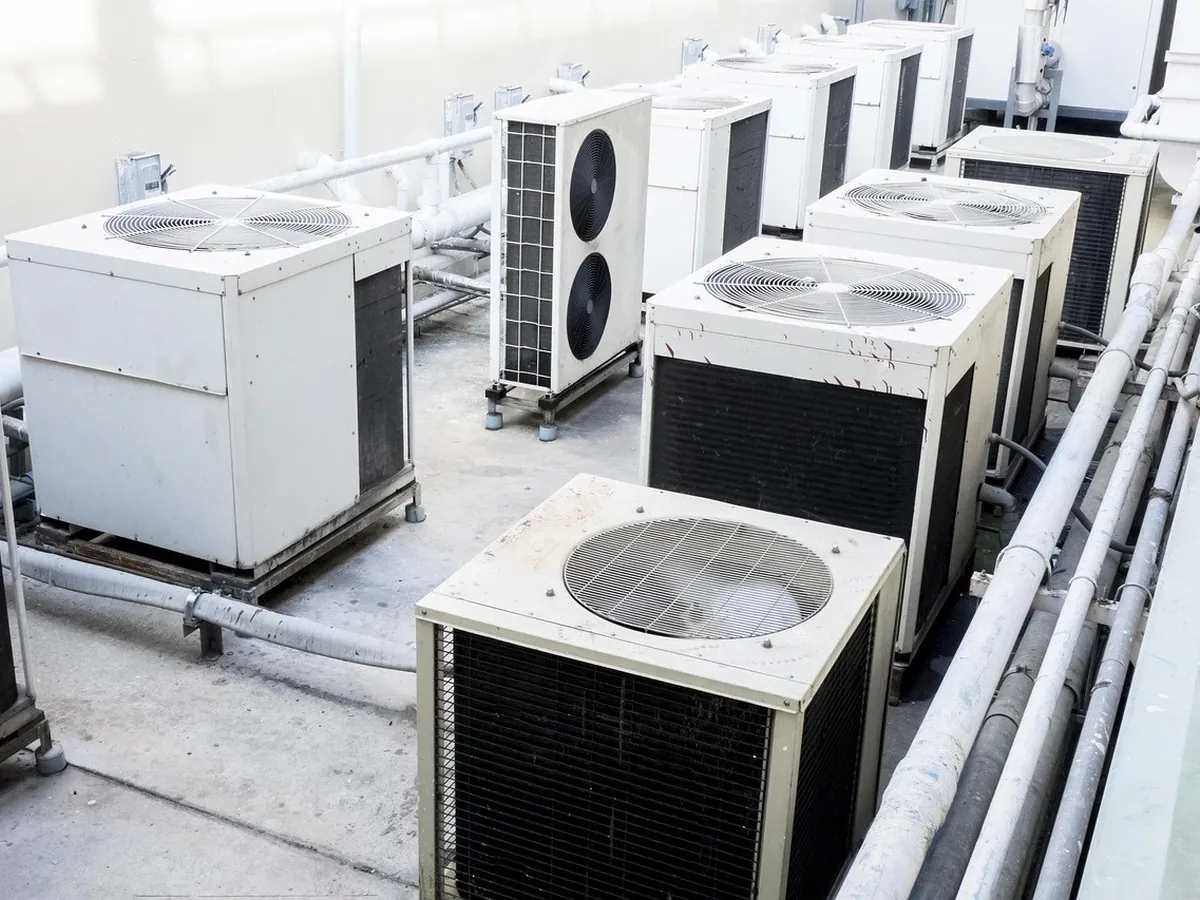
A central heat pump installed costs about $8,042 on average across the country, based on This Old House's 2026 national survey. Installation takes 4 to 8 hours for an experienced technician, and dual fuel systems and duct work take longer. Prices in Salt Lake City depend on your home and equipment, so ask for a written price after the technician sees the system.
HVAC Salt Lake City UT installs, repairs and maintains heat pumps for homes in Salt Lake City. Our crew comes out and measures, and you get a written price before any work starts. When the job needs a City permit, we pull it. After you call or send the form, we call you back within one business day.
In Salt Lake City, heating is the bigger job for any system. The airport averages 5,154 heating degree days a year against 1,420 cooling degree days (NOAA 1991–2020 normals). That is why this page starts with cold-weather performance, backup heat and defrost, then covers types, cost, heat pump repair, maintenance, rebates and how to compare a heat pump company.
How a heat pump heats and cools in Salt Lake City winters
A heat pump handles both seasons with a reversing valve that switches it between cooling and heating. When that valve fails, the unit cannot switch and blows cool air in heat mode. Bob Vila's guide to a heat pump that is not heating says a trained technician confirms the fault and replaces the valve, and that you should check the thermostat setpoint first.
The U.S. Department of Energy says a modern heat pump can cut the electricity used for heating by about 65 percent, a national figure measured against electric resistance heat. Ask for a bill estimate before you compare a heat pump with gas heat.
Do heat pumps work in cold winters?
Salt Lake City Building Services lists an 8°F winter design temperature, the outdoor temperature heating systems are sized for, and Climate Zone 5B. At the airport, NOAA's 1991–2020 normals show about 112 nights a year at or below freezing and a January average low of 24.2°F. Nights below 0°F average 0.6 a year, so deep cold is rare at the airport, though colder benches and canyons differ.
The Department of Energy says cold climates need heat pumps specially designed to run at lower outdoor temperatures before they switch to resistance heat. This Old House says today's cold-climate heat pumps can heat a home efficiently down to about -15°F outdoors, and that installers should add a backup heat source such as electric duct heaters. That is why the model matters: ask which cold-climate model you are quoted and what backup heat comes with it.
Defrost mode, steam and ice on the outdoor unit
Frost on a heat pump below 32°F is normal. The unit runs a defrost cycle of about 5 to 15 minutes, and steam during defrost is part of that cycle, according to the Consortium for Energy Efficiency's homeowner guide hosted by the Department of Energy. If the unit is stuck in defrost or covered in ice, call an HVAC professional.
Salt Lake City averages 51.9 inches of snow a year. This Old House says to set the outdoor unit on a snow stand a foot or more off the ground and still clear snow off the top after storms. The unit also needs plenty of airflow around and through it or it cannot run, and the exact clearances come from the unit's installation manual.
Backup heat and emergency heat
Heat pumps in cold climates usually have electric resistance backup heat. DOE guidance calls that heat inefficient and says its use should be kept to a minimum. The Consortium guide calls auxiliary heat electric strip heat, which is costly. If it runs often or shows constantly on the thermostat, have the unit checked. Backup heat may also come on briefly during a defrost cycle on ducted systems.
If your thermostat sits on emergency heat, read what it means when the system stays on emergency heat.
Types of heat pumps and what each costs
This page covers five kinds: air-source, cold-climate, ductless, geothermal and dual fuel. The table gives national figures from the sources named.
| Heat pump type | National cost | Source and date |
|---|---|---|
| Central heat pump, installed | About $8,042 on average | This Old House heat pump cost guide, 2026 |
| 3- to 5-ton unit for a 2,000-square-foot home | About $12,000 on average; top high-efficiency models can pass $20,000 | This Old House, 2026 |
| Hybrid (dual fuel) system | $2,500 to $10,000 | Bob Vila heat pump cost guide, 2024 |
| Geothermal, small or medium home | About $17,000 on average; more than $30,000 for large homes | This Old House, 2026 |
| Single-zone ductless mini-split | About $3,250 on average | This Old House, 2026 |
Air-source heat pump
For an air-source heat pump, a federal rule sets the floor for new equipment: split-system heat pumps made on or after January 1, 2023 must reach 14.3 SEER2 and 7.5 HSPF2, and single-package heat pumps 13.4 SEER2 and 6.7 HSPF2. Utah follows the national levels.
New residential heat pump systems must also use a refrigerant with a global warming potential under 700, a federal rule for products made or imported from January 1, 2025. That moves new equipment off R-410A.
Cold-climate heat pump installation
A cold-climate heat pump is the specially designed kind the Department of Energy describes above. For cold climate heat pump installation in Salt Lake City, ask how the model you are quoted performs at the 8°F design temperature. Cold-climate heat pumps cost more than standard models, so ask for a written price for both before you choose.
Ductless mini-split heat pump
A ductless mini-split needs no ducts. It needs one hole through the wall, bored about 3 inches across, for the line set, and the condensate drain slopes slightly down to the outside, says This Old House. A single-zone unit averages about $3,250 nationally in the 2026 survey. Our page on ductless mini-split options goes further.
Geothermal heat pump
A geothermal heat pump costs the most to install, as the table shows. Digging for a ground loop brings rules: in Utah the digger must notify utility owners at least 48 hours and no more than 14 days before digging (Utah's utility notice rule), and Salt Lake City lists a 30-inch frost depth. For a ground-source heat pump, ask for a site check of the yard and soil before any price is set.
Dual fuel and hybrid heat pump systems
A dual fuel heat pump, also called a hybrid heat pump system, pairs with a gas furnace. Bob Vila's 2024 guide puts a hybrid system at $2,500 to $10,000, a national range. Installing a dual fuel system takes longer than installing a heat pump alone.
A dual fuel system keeps a gas appliance in the house, so gas rules apply. Utah has adopted the 2024 International Fuel Gas Code, and even on small jobs a person certified under Utah Code 58-55-308 must install, repair or replace a gas appliance. Ask the installer to confirm the furnace is set up for our elevation as its manual requires.
Is a heat pump right for your home?
Ductwork and electrical panel checks
A heat pump with ducts is only as good as the ducts. DOE's home upgrades page says about 20% to 30% of the air moving through a typical duct system is lost to leaks, holes and poorly connected ducts, and DOE's Energy Saver guide says crushed or disconnected ducts keep warm air from reaching a room. Bob Vila's 2024 guide lists new ducts with a heat pump at $3,000 to $7,500, a national range. The Department of Energy's purchasing guide also names oversizing, a wrong refrigerant charge and leaky ducts as the installation problems that cut efficiency.
Capacity matters on the electrical side too. This Old House's 2026 guide gives $1,300 to $3,000 to upgrade to a 200-amp panel, a national range that applies when a heat pump or new air conditioner needs more capacity. The 2023 National Electrical Code, adopted statewide in Utah, covers the electrical hookup.
Heat pump vs furnace
Heating is Salt Lake City's bigger load, with 5,154 heating degree days a year. This Old House's 2026 furnace guide puts a furnace installed at $1,600 to $10,000, with a national average of about $4,799; its heat pump guide gives about $8,042 for a heat pump. The furnace guide lists a furnace life of 15 to 25 years, and This Old House's installation guide gives a heat pump 10 to 15 years.
A heat pump that replaces a furnace has to suit the cold and come with backup heat. A heat pump added to an existing furnace makes a dual fuel system. ENERGY STAR says to consider replacing a furnace more than 15 years old and a heat pump or air conditioner more than 10 years old.
Heat pump vs air conditioner
The reversing valve lets one outdoor unit cool in summer and heat in winter, so a heat pump can stand in for an air conditioner. A central air conditioner installed costs $4,000 to $8,000, a national range from This Old House's 2026 installation guide. The federal minimum for a new split-system air conditioner in Utah is 13.4 SEER2, while a split-system heat pump must reach 14.3 SEER2 and 7.5 HSPF2. Cooling is the smaller job here: about 62 days a year reach 90°F, and the July average high is 94.0°F.
Your bills and your coldest months
Look at last winter's heating bills month by month. Salt Lake City's heating peaks in December and January, at about 1,018 and 1,041 heating degree days (NOAA 1991–2020 normals). Ask the crew to estimate the same months with a heat pump, and ask what backup heat will do on the coldest days.
Sizing, installation day and permits
Sizing a heat pump
The Air Conditioning Contractors of America names Manual J, 8th Edition, as the national standard for sizing home heating and cooling equipment, and says a proper load calculation is required by national building codes and most local jurisdictions. The Department of Energy warns that oversized cooling systems cost too much, give poor comfort and can lead to mold, and says rule-of-thumb tons per square foot ignores climate and how efficient the house is. The Better Business Bureau advises asking each contractor to explain how it worked out the capacity it recommends. In Salt Lake City, the load calculation sizes heating to the 8°F winter design temperature that Salt Lake City Building Services lists.
What installation day looks like
These points from the rules and guides above shape the day:
- The permit is pulled when the job needs one, and inspections are requested before any work is covered.
- The old unit's refrigerant is recovered. Federal rules forbid intentionally venting refrigerant while servicing or disposing of air conditioning equipment, and technicians who service it must hold EPA Section 608 certification.
- The outdoor unit needs plenty of airflow around and through it, and This Old House advises a snow stand a foot or more off the ground.
- The electrical hookup follows the 2023 National Electrical Code, and the unit is anchored as code requires for Seismic Design Category D2, the category Salt Lake City lists for homes.
- Ask the installer to test the system with you before they leave and to explain any wait before full use.
Before the installer leaves, know where the filter is and how to change it, where the drain pan and condensate drain are, how long the warranty runs and how backup heat is set. Ask the crew how the weather on install day affects the schedule.
Permits and inspections in Salt Lake City
A permit is required to install or alter a home's mechanical, electrical or plumbing system in Salt Lake City, according to Salt Lake City Building Services. All applications go through the city's Citizen Access Portal. Mechanical, electrical and plumbing are separate trade permits, so a heat pump job can need more than one. Fees are based on the value of the project, counting all material and reasonable labor. Ask for the permit fee to be listed as its own line on your written quote.
The owner of an owner-occupied primary home may get the permit, with an Owner/Builder Certification. For a rental or commercial property, a contractor must get the permits and do the work. Whoever got the permit schedules the inspections. Work found without a permit gets a Stop Work notice and can be charged a double fee. Utah's updated statewide codes took effect July 1, 2026, including the 2024 International Mechanical Code and the 2021 International Residential Code.
Heat pump repair in Salt Lake City
Signs a heat pump needs repair
The Consortium for Energy Efficiency's homeowner guide says the most common sign a heat pump is not working right is a sudden jump in electricity use on the utility bill. Other signs it lists are frequent cycling, a setpoint that is never reached, frozen coils and strange smells. A unit that blows cool air in heat mode points to the reversing valve.
Heat pump repair cost
Bob Vila's 2024 guide gives $150 to $600 per heat pump repair, a national average range. A diagnostic visit runs $75 to $150 nationally, according to This Old House's 2026 guide, which uses the same visit type for furnaces and heat pumps. If the system is still under warranty, replacement parts may cost nothing and the owner pays only for labor, and a warranty claim may need proof of regular maintenance.
Bigger parts are separate jobs: a compressor replacement, a reversing valve replacement, a heat pump defrost board replacement, a fan motor replacement or an outdoor unit replacement. Each one is its own price, so get it in writing before work starts. If a part must be ordered, ask for the expected arrival date in writing with the repair price.
Emergency and same day heat pump repair
Calls to HVAC Salt Lake City UT are returned within one business day. For emergency heat pump repair, note what the system is doing and how old it is before you call. If a company advertises same day heat pump repair, ask for its response time in writing. Bob Vila's 2023 AC repair guide lists after-hours labor at $160 to $250 an hour, a national range, so ask whether an after-hours rate applies before you book.
Refrigerant and older systems
Parts used to repair existing air conditioners and heat pumps are not covered by the new refrigerant limits, so an existing R-410A system can still be repaired. No new R-22 has been produced or imported in the U.S. from 2020 on, and no EPA rule makes you replace or convert a working R-22 system. If your system uses R-22, ask for written prices to repair it and to replace it so you can compare.
Repair or replace a heat pump
This Old House gives a heat pump 10 to 15 years, and the Consortium guide says air-source heat pumps typically last about 15 years, depending on type and upkeep. For heat pump replacement, get the repair price and the replacement price side by side, especially past the 10-year mark.
Heat pump maintenance, tune-up and inspection
This Old House says to maintain a heat pump once a year: filter service, refrigerant checks, an electrical inspection and condenser cleaning. The Consortium guide says most makers call for heat pump service every 1 to 2 years. The Consortium guide says that visit checks refrigerant charge and leaks, airflow, both coils and the drain pan, and that backup heat runs only when needed.
A heat pump tune up costs $75 to $150 nationally, and a maintenance plan costs $75 to $150 a year, or $150 to $300 for a twice-a-year plan (This Old House, 2026). Many contractors offer yearly inspect-and-service contracts. The Better Business Bureau says to compare the cost against likely repairs and make sure the plan does not duplicate warranty coverage. Keep the record of each heat pump inspection, since a warranty claim may need proof of regular maintenance.
Filters are the job you do yourself. Ductless mini-split filters should be cleaned at least monthly, and ducted heat pump filters about every 90 days, says the Consortium guide. EPA advises a filter rated at least MERV 13, or as high as the system fan and filter slot allow. Use a thermostat made for heat pumps: DOE says programmable thermostats have generally not been recommended for heat pumps, and that heat pump thermostats ramp up slowly so the electric backup strips do not turn on.
April and October are the mildest months, with about 400 and 337 heating degree days and almost no cooling. Those low-load months are a sensible time for a tune-up or a planned replacement.
Heat pump cost in Salt Lake City
The table lists national figures. Salt Lake City prices depend on your home and equipment, which is why the crew measures before you get a written price. Heat pump prices vary by size, type, ducts and electrical work.
| Cost item | National range | Source and date |
|---|---|---|
| 3.5-ton unit for about 2,500 square feet, before installation | $3,900 to $6,400 | Bob Vila, 2024 |
| New ducts with a heat pump | $3,000 to $7,500 | Bob Vila, 2024 |
| Heat pump thermostat | $140 to $350 | Bob Vila, 2024 |
| Upgrade to a 200-amp panel | $1,300 to $3,000 | This Old House panel upgrade guide, 2026 |
| Diagnostic visit | $75 to $150 | This Old House repair guide, 2026 |
| One heat pump repair | $150 to $600 | Bob Vila, 2024 |
| Maintenance visit | $75 to $150 | This Old House maintenance guide, 2026 |
| HVAC labor per hour | $75 to $150 | Bob Vila AC repair guide, 2023 |
What moves the heat pump installation cost
Size comes first: nationally, a 3.5-ton unit alone runs $3,900 to $6,400 before installation (Bob Vila, 2024), and a 3- to 5-ton heat pump for a 2,000-square-foot home averages about $12,000 (This Old House, 2026). ENERGY STAR says correctly installed high-efficiency equipment can save up to 20 percent on heating and cooling costs. Type matters, as the earlier table shows: geothermal and top high-efficiency models sit at the top of the heat pump replacement cost range. Ducts and the electrical panel can add thousands.
In Utah, materials a contractor installs so they become part of the house are taxed to the contractor when it buys them, so the tax is in the contractor's price. Ask whether tax is already included in the price you are quoted. For a replacement, the Better Business Bureau says the estimate should list all related work such as ducts, registers and wiring, so ask for that in your heat pump quote. For the wider picture, see what HVAC work costs in Salt Lake City.
Heat pump rebates and financing
Rocky Mountain Power changed its Wattsmart Homes incentives in Utah on February 27, 2026, adding new heat pump offerings. Check your utility bill for the company that serves your home. Check the utility's current rebate list before you buy, and ask the contractor which model numbers qualify.
For heat pump financing, the Federal Trade Commission says never to agree to financing through your contractor without shopping around and comparing loan terms. Scammers suggest a lender they know, and the scam can end with a loan against your home. The FTC also says to be skeptical of offers that promise drastic energy savings, and to get any offer to cut utility bills in writing before you sign.
Winter is when heating scams rise. The FTC's October 2022 consumer alert says to resist high-pressure door-to-door sales of heating systems, because pressure to act fast is a sign of a scam. It also says anyone posing as the utility who threatens to shut off service and demands payment by gift card, cryptocurrency or wire transfer is a scammer. A rebate or a financing offer that arrives with a deadline and a demand for cash up front is not one to trust.
How to choose a heat pump company, installer and contractor
Utah law requires anyone working as a contractor in a licensed construction trade, HVAC included, to hold a state license before doing the work. Utah lists HVAC contractor as its own license classification. Ask for the contractor's Utah licence number and look it up on the state licensing site before you sign. Check that your bid and contract show the contractor's Utah licence number. The state's consumer guide says to check at dopl.utah.gov while you gather bids, and notes that licensed Utah contractors must hold and maintain liability coverage. An unlicensed contractor working on your property could make you liable if any of its workers are injured.
Get bids from 2 to 3 heat pump contractors and check at least 3 references for each. Ask the heat pump installer these questions:
- How did you work out the capacity you recommend, and can you show the calculation?
- Are you an approved, authorized dealer for this equipment brand?
- Are your technicians EPA-certified to handle refrigerants?
- Is labor included in the guarantee, does it cover the whole job or only some parts, and who backs it, the dealer or the manufacturer?
- Who pulls the permit, and will it be provided to me or displayed on the job site?
Put the job in a written contract with the exact work, the price, start and finish dates, who gets the permit, the contractor's license number and your right to cancel, with no blank spaces. Be cautious of large down payments, pay as the work is completed, and never pay in cash. Before the final payment, make sure the contractor has signed lien releases from all suppliers and subcontractors. The FTC lists these warning signs: a contractor who knocks on your door saying they are in the area, pressure for an immediate decision, and a request that you get the building permits yourself.
Heat pump questions answered
Do heat pumps work in cold winters?
Cold-climate models do. The Department of Energy says cold climates need specially designed models, and This Old House says installers should add backup heat. Salt Lake City's design temperature is 8°F.
How does a heat pump heat my home when it is cold outside?
Today's cold-climate heat pumps can heat a home efficiently down to about -15°F outdoors, This Old House says, and electric backup heat covers the coldest hours. Frost below 32°F is normal, and the unit runs a defrost cycle of about 5 to 15 minutes.
Can a heat pump replace my furnace and air conditioner?
One unit does both jobs through the reversing valve. In Salt Lake City, plan for a cold-climate model with backup heat, or a dual fuel system that keeps the furnace.
What is a dual-fuel heat pump system?
It pairs a heat pump with a gas furnace and is also called a hybrid system. Bob Vila lists a national range of $2,500 to $10,000 for it in 2024.
Do I need ductwork for a heat pump?
A ducted heat pump needs ducts in good shape, and new ducts run $3,000 to $7,500 nationally. A ductless mini-split needs none, only a wall hole about 3 inches across for the line set.
How long does a heat pump last?
This Old House says 10 to 15 years, and the Consortium for Energy Efficiency says about 15 years for air-source units, depending on type and upkeep.
How often should a heat pump be serviced?
Once a year per This Old House, and every 1 to 2 years per most makers, as the Consortium guide reports.
How much does a heat pump cost?
About $8,042 installed on average nationally in 2026. Ask for a written price after the technician sees your system.
Get a written price for your heat pump
Call us or use the form. We call you back within one business day, and our crew comes out and measures. You get a written price before any work starts, and we pull the City permit when the job needs one. You can also contact HVAC Salt Lake City UT to ask about a heat pump quote.
Common problems and what they mean
Heat Pump Stuck on Emergency Heat
Heat pump stuck on emergency heat or blowing cold air in heat mode in Salt Lake City? See what can cause it, what is safe to check and what a repair costs.
Heat Pump Frozen
Heat pump frozen in Salt Lake City? Learn when frost, steam and defrost mode are normal, when ice means a repair, national costs and how to get a written price.
For typical prices and what moves them, see HVAC Cost.
Nearby towns
Town guides: HVAC in West Valley City, UT, HVAC in West Jordan, UT, HVAC in Murray, UT.
What is your heating or cooling system doing?
Pick what you see, smell or notice to read what government and equipment maker pages say it can mean and what to do first.
- I smell gas in or near the house
- If the smell is strong or you are not sure, leave the building right away, tell others to leave, and then call your gas company or 911 from a phone away from the smell, such as a neighbor's. Do not flip light switches, use a phone near the smell, adjust the thermostat or appliance controls, or light matches or candles. Do not go back inside until your gas company says it is safe. (Connecticut Public Utilities Regulatory Authority)
- A carbon monoxide alarm is going off, or people feel sick and better once outside
- Get outside to fresh air right away, and then call 911. Symptoms of carbon monoxide poisoning include headache, dizziness, weakness, nausea, vomiting, sleepiness and confusion, and the EPA says they can feel like the flu and clear up after leaving home. The EPA says to have a trained professional inspect, clean and tune up the central heating system (furnaces, flues and chimneys) every year. (U.S. Consumer Product Safety Commission, U.S. Environmental Protection Agency)
- The furnace will not turn on and the house has no heat
- One equipment maker's guide lists basic checks: the thermostat is set to heat and above the room temperature, the breaker marked furnace or heat is on, the furnace power switch is on, and the air filter is not clogged. More technical causes it names are a faulty ignition system, a dirty flame sensor, blocked air vents or a tripped limit switch. If the basic checks do not fix it, it says a professional HVAC contractor should inspect the system. If you smell gas, follow the gas answer instead. (Carrier) Read more
- The furnace keeps turning on and off before the house warms up
- This is called short cycling. One equipment maker's guide says restricted airflow from a dirty filter can make the heat exchanger overheat and trigger a safety shutoff. Check the filter first. If the furnace keeps short cycling, the guide says to contact a qualified HVAC professional. (Carrier) Read more
- The air conditioner runs but blows warm air
- One equipment maker's guide says to set the thermostat to Cool with the fan on Auto, replace a clogged filter, and confirm the breaker has not tripped and the outdoor unit's power switch is on. It recommends turning the AC off if it keeps blowing warm air. Causes it names include a refrigerant leak, faulty contactors or capacitors, a failing blower motor and a failed or overheated compressor. If the checks do not fix it, it says to contact a professional HVAC technician. (Carrier) Read more
- There is ice on the AC coil or the copper lines
- One equipment maker's guide says to turn the AC off right away so the ice can thaw, and to check the air filter and replace it if dirty. It names restricted airflow from dirty filters or blocked vents, and a refrigerant leak or low refrigerant, as causes. If the system freezes again after restarting, it says to contact a technician. (Carrier) Read more
- Water is pooling around the indoor unit or furnace while the AC runs
- ENERGY STAR's maintenance checklist says to check the condensate drain in a central air conditioner, furnace or heat pump in cooling mode, because a plugged drain can cause water damage in the house and affect indoor humidity levels. The same checklist has a contractor do a check-up every year, the cooling system in spring and the heating system in fall. (ENERGY STAR (U.S. EPA)) Read more
- The outdoor heat pump unit is steaming or covered in frost in winter
- A heat pump melts frost off its outdoor unit with defrost cycles. One heat pump maker says a cloud of steam from the outdoor unit is the ice melting and evaporating, and is normal. The same maker says to have it looked at if the heat pump seems to switch into defrost constantly, or if the defrost cycles last longer and longer while frost and ice start to cover the unit. (Trane) Read more
- Dust blows out of the vents, or there seems to be mold or pests in the ducts
- The EPA says duct cleaning has never been shown to actually prevent health problems. It lists when to consider cleaning: substantial visible mold growth inside hard-surface ducts, ducts infested with rodents or insects, or ducts clogged with excessive dust and debris, or releasing particles into the home. It adds that something that looks like mold may need laboratory analysis to confirm. (U.S. Environmental Protection Agency) Read more
The gas and carbon monoxide answers follow the wording of the U.S. Consumer Product Safety Commission, the U.S. EPA and Connecticut's utility regulator; follow your own gas company's instructions. The other answers list first checks and likely causes from two equipment makers' homeowner guides, ENERGY STAR and the EPA; they are not a diagnosis.
Sources: U.S. Consumer Product Safety Commission, U.S. Environmental Protection Agency, Connecticut Public Utilities Regulatory Authority, Carrier, Carrier, Carrier, Carrier, ENERGY STAR (U.S. EPA), Trane, U.S. Environmental Protection Agency.