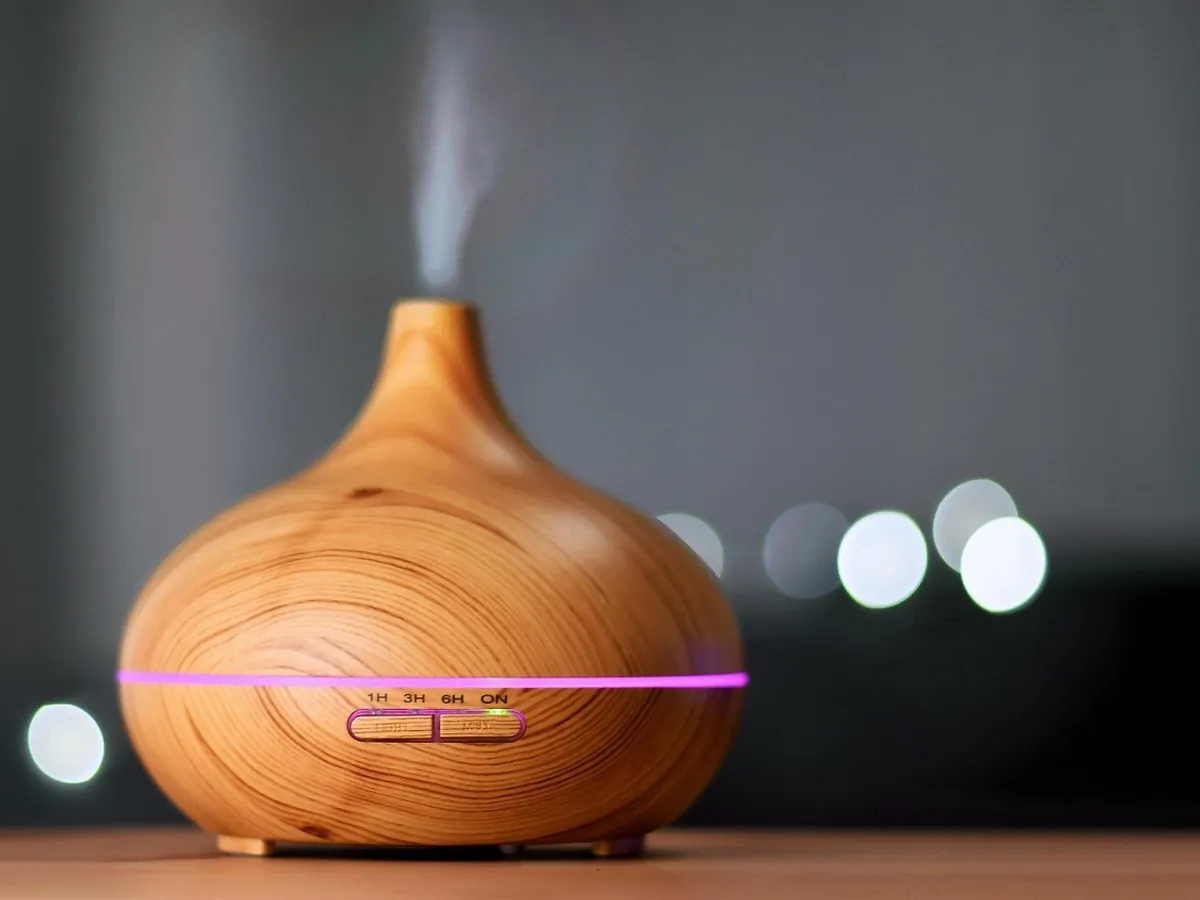
Indoor air quality services in Salt Lake City cover the equipment that filters, cleans, moistens and dries the air a heating and cooling system moves. Nationally, a whole-house air purifier runs $456 to $4,557, with an average of $2,448 (Bob Vila, 2023). A whole-house ductless humidifier project runs $600 to $2,000 (This Old House, 2026). A ductless humidifier takes about 2 hours to install, according to This Old House. Prices in Salt Lake City depend on your home and equipment, so ask for a written price after the technician sees the system.
Indoor air quality products and IAQ equipment are the parts fitted to your furnace and ducts: filters, air purifiers, humidifiers, dehumidifiers and ventilators, plus indoor air quality testing and air quality testing. An HVAC system can help with dust and other particles, dry air and humidity. It cannot promise a health result.
Signs of poor indoor air quality at home
Start with what you can see, smell and feel, then ask a technician what is worth measuring. These are the signs the agencies describe, and the pollutants behind them.
Signs you can check yourself
If water condenses on windows, walls or pictures, EPA says to lower the humidifier setting or use it less. EPA gives three reasons to clean ducts. They are ducts clogged with excessive dust and debris, substantial visible mold in hard-surface ducts, and vermin in the ducts. Flu-like symptoms, such as headaches, dizziness, confusion and nausea, that clear up after you leave the house can point to carbon monoxide, according to EPA.
Common indoor pollutants
Carbon monoxide comes from leaking furnaces and chimneys and from worn or poorly maintained furnaces, according to EPA. Some air cleaners and furnace filters make ozone on purpose. EPA says to avoid portable air cleaners and furnace filters that do, and adds that electrostatic precipitators and ionizers may also emit ozone, a lung irritant.
Dust, pollen and pet dander
These are particles, and filters are built for particles. Compare MERV ratings before you compare brands. A UV light does not help with dust or pollen, according to Bob Vila's 2023 national air purifier guide. If you have pets or allergies, This Old House says to replace the filter more often.
Mold and musty odors
If the cause of mold growth in the ducts is not corrected, EPA says the mold will come back. Wet or moldy fiberglass duct material should be replaced, not cleaned, and EPA, NADCA and NAIMA all recommend replacement. Nationally, professional mold remediation runs $600 to $2,000 (Bob Vila, 2023). EPA says to keep indoor relative humidity below 60 percent.
Winter inversions in the Salt Lake Valley
NOAA's Chemical Sciences Laboratory describes strong multi-day winter inversions in the Salt Lake Valley. They come mostly in December, January and early February, and they trap pollution near the ground. NOAA's 2023 research news says winter fine-particle (PM2.5) levels in the Salt Lake area exceed national air quality standards on about 18 days a year on average. Those are the weeks to ask what your filter and fan settings are doing.
Air filtration: MERV filters, media air filters and air purifiers
Start with the filter, then decide whether the system needs more. The sections below go from filters to media systems to whole-house air purifiers, with a national price for each step.
MERV filter ratings in plain words
MERV reports how well a filter captures particles between 0.3 and 10 microns, according to EPA. EPA advises a MERV filter rated at least MERV 13, or as high as the system fan and filter slot allow. A MERV 13 filter catches at least 50% of particles 0.3 to 1.0 microns. It catches 85% of particles 1.0 to 3.0 microns and 90% of particles 3.0 to 10 microns. Because the limit is the fan and the filter slot, ask the crew what rating your system can take before you buy.
Media air filters and HVAC filter replacement
An extended media air filter system nationally costs $400 to $700 (Bob Vila, 2023). Its media is replaced about once a year. Plain replacement filters run $10 to $200 each (Bob Vila, 2023). For HVAC filter replacement, This Old House says disposable fiberglass filters need changing every 30 days. Pleated filters may last 3 months to a year. EPA says makers typically suggest every 60 to 90 days, and sooner when a filter is heavily soiled. Follow the maker's schedule for your filter. This Old House says to check the furnace filter monthly.
Smoke days
On smoky days, EPA says to close the HVAC fresh-air intake or set the system to recirculate. It also says to switch the thermostat fan from Auto to On, so the filter runs all the time. EPA estimates that a MERV 13 or higher filter with the fan on all the time may cut indoor PM2.5 by about 50%. A typical low-efficiency filter may cut about 24%. It is an estimate, and it varies by home.
Whole-house air purifiers, whole house HEPA filters and electronic air cleaners
By type, a whole house HEPA filter system runs $2,000 to $4,000 nationally. An electronic air cleaner runs $600 to $2,000 installed, and an extended media system runs $400 to $700 (Bob Vila, 2023). For whole home air purifier installation, ask for the unit and the labor as separate lines on the written price. For any air purification system, ask what particles it is built to catch and how you will know it is working.
If a company quotes an electronic air cleaner, an ionizer or an electrostatic precipitator, ask whether the model makes ozone.
UV lights and air scrubbers
A UV light for an HVAC system runs up to $3,000 nationally (Bob Vila, 2023). We make no germ-kill promise for UV lights or any other device. If a company sells an air scrubber for HVAC use, ask what it does and what the replacement parts cost. Ask whether it makes ozone, too.
Humidifiers, dehumidifiers and humidity control
Whole house humidifier: types and installation
EPA says central humidifiers are built into the heating and cooling system. They humidify the whole house. Ask for the unit and professional humidifier installation as separate lines on the written price. The national project range is in the cost table below.
The types you will hear about are the bypass humidifier, fan-powered humidifiers and the steam humidifier. Ask which type the company would fit to your furnace and why, and ask for each type's price in writing so you can compare. For whole house humidifier installation, also ask where the unit will sit and how its water supply and drain will be handled.
Humidifier repair and humidifier replacement
This Old House says to replace humidifier filters once a season, or as the maker recommends. When a unit stops working, ask for humidifier repair and humidifier replacement prices in writing, so you can compare them. EPA says not to humidify indoor air above 50 percent relative humidity, and that a hygrometer from a hardware store measures it.
Dry winter air and static in Salt Lake City
Heating is the bigger load here. NOAA's 1991-2020 normals for Salt Lake City International Airport show 5,154 heating degree days a year, against 1,420 cooling degree days. They also show about 112 nights a year at or below freezing. January's average low is 24.2 degrees F. EPA says to keep indoor relative humidity below 60 percent, ideally between 30 and 50 percent. With a heating season that long, ask what humidity level a humidifier would hold and how you would check it. Ask for an indoor humidity reading during the visit if dry air or static is a problem.
Whole house dehumidifier and summer humidity
July is the driest month in Salt Lake City, with 0.49 inches of precipitation on average (NOAA, 1991-2020 normals). Whether a home needs a dehumidifier is a question for a humidity reading. Nationally, a whole-house dehumidifier costs $1,300 to $2,800 to install, with an average of $1,500 (Bob Vila, 2023). For dehumidifier installation, ask for the unit and the labor as separate lines.
Your cooling system matters here too. The Department of Energy says oversized cooling systems cost too much and give poor comfort. It says they can lead to mold and poor indoor air quality. It adds that the contractor should size equipment with ACCA Manual J. Ask each company to explain how it worked out the capacity it recommends.
Ventilation, testing, duct cleaning and carbon monoxide alarms
Ventilation systems and ERV installation
A ventilation system, including an ERV or an HRV ventilator, is separate equipment from the filter and the humidifier. Ask whether one suits your home. Ask for a written price for a ventilator once the technician has checked your home and ducts. Also ask how its outside-air intake can be closed on smoky days.
Indoor air quality testing and air quality testing
Ask any company that offers indoor air quality testing or air quality testing what it measures. Ask which results the report lists and what the test costs, all in writing. Some checks you can make yourself. A hygrometer measures humidity. Test your home for radon with a low-cost kit; it is the only way to know your level. EPA says to fix a home with radon at 4 pCi/L or more. It says to consider fixing between 2 and 4 pCi/L. EPA also says radon causes about 21,000 lung cancer deaths a year in the U.S.
Air duct cleaning and air duct sanitizing
EPA says duct cleaning has never been shown to prevent health problems. It does not recommend routine duct cleaning, only cleaning as needed. A proper cleaning opens access ports to reach the whole system. It uses vacuum equipment that exhausts outside the home and protects carpets and furniture. It leaves every part visibly clean.
Nationally, whole-home air duct cleaning runs $268 to $492 with an average of $379, and air duct sanitizing runs $100 to $250 (Bob Vila, 2023). EPA has registered no chemical biocides for use inside internally insulated air ducts, and it does not routinely recommend duct sealants sprayed inside ducts. EPA does not certify, endorse or approve duct cleaning companies, so a claim of EPA certification is a warning sign. Our ductwork page covers duct repair, sealing, replacement and cleaning in more detail.
Carbon monoxide alarms and your heating system
The Consumer Product Safety Commission says to put battery or battery-backup carbon monoxide alarms on every level of the home and outside sleeping areas. It lists the signs of carbon monoxide poisoning as headache, dizziness, weakness, nausea, vomiting, sleepiness and confusion.
EPA says to have a trained professional inspect, clean and tune the furnace, flues and chimneys once a year. If an alarm is sounding now, read what to do when a carbon monoxide alarm goes off. If you smell gas, leave the home right away. Leave doors and windows open behind you if you can do so without delay. Call the gas utility's 24-hour emergency line once you are safely away.
Indoor air quality equipment cost, permits and choosing a company
The table gives dated national ranges so you can tell whether a written price is in a sensible neighborhood. Our HVAC cost guide for Salt Lake City puts these ranges next to the other jobs a system needs.
| Item | National range | Source and date |
|---|---|---|
| Whole-house air purifier (average $2,448) | $456 to $4,557 | Bob Vila air purifier guide, 2023 |
| Whole house HEPA system | $2,000 to $4,000 | Bob Vila air purifier guide, 2023 |
| Electronic air cleaner, installed | $600 to $2,000 | Bob Vila air purifier guide, 2023 |
| Extended media filter system | $400 to $700 | Bob Vila air purifier guide, 2023 |
| UV light air filter | Up to $3,000 | Bob Vila air purifier guide, 2023 |
| Replacement filter | $10 to $200 | Bob Vila air purifier guide, 2023 |
| Whole-house ductless humidifier project | $600 to $2,000 | This Old House, 2026 |
| Whole-house dehumidifier, installed (average $1,500) | $1,300 to $2,800 | Bob Vila dehumidifier guide, 2023 |
| Whole-home air duct cleaning (average $379) | $268 to $492 | Bob Vila duct guide, 2023 |
| Air duct sanitizing | $100 to $250 | Bob Vila duct guide, 2023 |
| HVAC labor, per hour | $75 to $150 | Bob Vila AC repair guide, 2023 |
What moves the price
The type of equipment comes first: in the table, a whole house HEPA system costs more than an extended media system or an electronic air cleaner. Labor comes second, billed by the hour as the table shows. Parts that wear out come third, such as media replaced about once a year and humidifier filters replaced once a season. Ask for the permit fee to be listed as its own line on your written quote.
Permits, licenses and written contracts
Salt Lake City Building Services says a permit is required to install or alter a home's mechanical, electrical or plumbing system. Mechanical means heating, ventilation and air conditioning. Whoever got the permit, owner or contractor, is responsible for scheduling the inspections. Work found without a permit gets a Stop Work (red tag) notice and can be charged a double fee. Ask the contractor when the permit will be pulled and when the inspection is booked before work starts.
Ask for the contractor's Utah licence number and look it up on the state licensing site before you sign. The Utah Division of Professional Licensing advises getting bids from 2 to 3 contractors and checking at least 3 references for each. Put the job in a written contract with no blank spaces. It should list the exact work, the price, start and finish dates, and who gets the permit. It should also show a guarantee of liability coverage, the license number and your right to cancel. Be cautious of large down payments, pay as the work is completed, and never pay in cash. The Better Business Bureau adds that the installer should be an authorized dealer for the equipment brand. For duct cleaning, EPA says to ask the provider to show you any mold or other contamination they say exists.
Common problems and what they mean
Musty Smell From Vents
Musty smell from vents in Salt Lake City, UT? See where mold and moisture start in a duct system, what EPA says, what to check and national cost ranges.
Dry Air in Your House in Winter
Dry air in your house in winter in Salt Lake City, UT? Read the humidity, check your humidifier, see national cost ranges and what to ask a crew.
For typical prices and what moves them, see HVAC Cost.
Nearby towns
Town guides: HVAC in West Valley City, UT, HVAC in West Jordan, UT, HVAC in Murray, UT.
Indoor air quality FAQ
What are signs of poor indoor air quality?
Agencies describe water condensing on windows, walls or pictures, and ducts clogged with dust and debris. They also describe visible mold in hard-surface ducts and vermin in the ducts. Headaches, dizziness, confusion and nausea that ease when you leave the house can point to carbon monoxide.
How can a whole house humidifier improve my air?
A central humidifier is built into the heating and cooling system and humidifies the whole house, according to EPA. EPA says to keep indoor relative humidity below 60 percent, ideally between 30 and 50 percent, and not to humidify above 50 percent. In Salt Lake City, heating is the bigger load: 5,154 heating degree days a year against 1,420 cooling degree days (NOAA, 1991-2020 normals).
How often should indoor air quality be tested?
Ask the company that offers indoor air quality testing how often it would repeat the test and what would trigger a repeat, in writing. Test your home for radon with a low-cost kit; it is the only way to know your level.
Does my HVAC system control humidity?
A central humidifier is built into the heating and cooling system. EPA's ceiling for indoor humidity is 60 percent. The Department of Energy says an oversized cooling system can lead to mold and poor indoor air quality, so ask how the equipment was sized. Ask for an indoor humidity reading during the visit if dry air or static is a problem.
How can I improve my home's air quality?
Use a filter rated at least MERV 13, or as high as your fan and filter slot allow, and replace it as the maker says. Keep humidity between 30 and 50 percent, put carbon monoxide alarms on every level and outside sleeping areas, and avoid air cleaners that intentionally make ozone. Clean ducts only when there is a reason. In the Salt Lake Valley, NOAA says strong winter inversions trap pollution near the ground, mostly in December, January and early February; those are the weeks to check the filter.
How often should I change my air filter?
Follow the maker. Disposable fiberglass filters need changing every 30 days, according to This Old House. EPA says makers typically suggest every 60 to 90 days. Check the filter monthly, and change it sooner when it is heavily soiled.
Get a written price for your indoor air quality equipment
Call us or use the form. We call you back within one business day, the crew comes out and measures, and you get a written price before any work starts. When the job needs a City permit, we pull it. You can also reach us through the contact page.
Sources
- This Old House (read 2026-11-20)
- Bob Vila (read 2026-11-20)
- Bob Vila (read 2026-11-20)
- Bob Vila (read 2026-11-20)
- Bob Vila (read 2026-11-20)
- This Old House (read 2026-11-20)
- Salt Lake City Building Services (read 2026-11-20)
- Enbridge Gas Utah (read 2026-11-20)
- NOAA National Centers for Environmental Information (read 2026-11-20)
- NOAA National Centers for Environmental Information (read 2026-11-20)
- U.S. Environmental Protection Agency (read 2026-11-20)
- U.S. Environmental Protection Agency (read 2026-11-20)
- U.S. Environmental Protection Agency (read 2026-11-20)
- U.S. Consumer Product Safety Commission (read 2026-11-20)
- U.S. Environmental Protection Agency (read 2026-11-20)
- NOAA Chemical Sciences Laboratory (read 2026-11-20)
- U.S. Environmental Protection Agency (read 2026-11-20)
- U.S. Environmental Protection Agency (read 2026-11-20)
- U.S. EPA (read 2026-11-20)
- This Old House (read 2026-11-20)
- U.S. Department of Energy, Energy Saver (read 2026-11-20)
- U.S. EPA (read 2026-11-20)
- Utah Department of Commerce, Division of Professional Licensing (read 2026-11-20)
- Better Business Bureau (read 2026-11-20)